
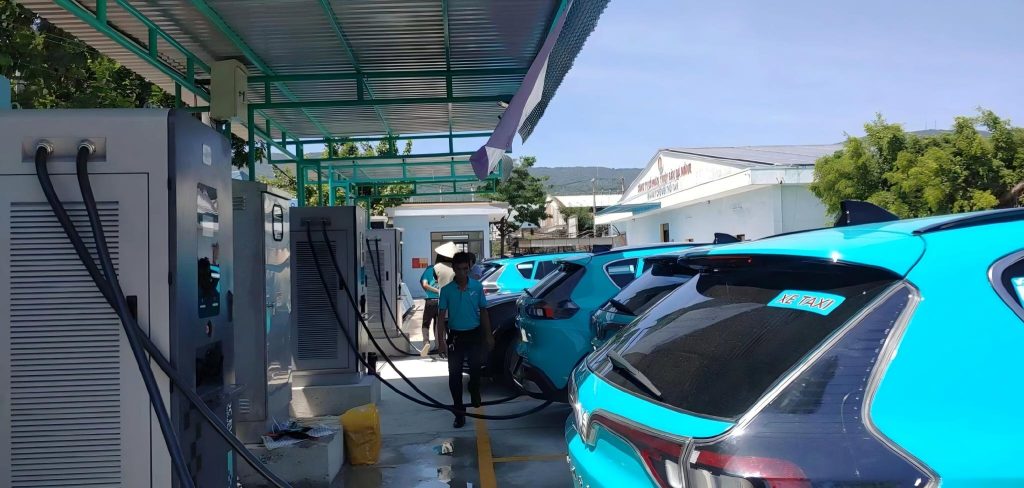
The global transition toward electric mobility has accelerated dramatically in recent years. Governments, automotive manufacturers, and energy providers are investing heavily in electric vehicle infrastructure to support the rapid growth of EV adoption.
In 2026, choosing the right EV charger involves much more than selecting a connector type or power rating. Charging infrastructure now plays a central role in energy management, grid stability, and fleet electrification strategies.
For homeowners, businesses, and logistics operators, understanding the different types of EV chargers and their technical capabilities is essential for building reliable and future-proof charging infrastructure.
This guide explains the key EV charger technologies available in 2026 and provides practical guidance on selecting the right charger based on charging needs, installation environments, and long-term scalability.
Table of Contents
- Overview of the EV Charging Market in 2026
- Types of EV Chargers Explained
- AC EV Chargers: Home and Workplace Charging
- DC Fast Chargers: Public and Commercial Charging
- Ultra-Fast Charging for Electric Trucks and Fleets
- Key Factors When Choosing an EV Charger
- EV Charger Technical Specifications and Power Levels
- Installation Requirements and Infrastructure Planning
- Smart Charging, OCPP, and Energy Management
- Future Trends in EV Charging Technology
- Frequently Asked Questions About EV Chargers
1. Overview of the EV Charging Market in 2026
Electric vehicles are no longer considered niche products. Global EV sales continue to grow each year, driven by stricter emission regulations, battery technology improvements, and falling vehicle costs.
As EV adoption increases, the demand for charging infrastructure grows accordingly. Charging solutions now support multiple applications including:
- residential charging
- workplace charging
- destination charging
- public charging networks
- commercial fleet charging
- logistics depot charging
The rapid expansion of EV infrastructure has created a diverse ecosystem of charging technologies ranging from portable AC chargers to ultra-fast DC charging stations capable of delivering several hundred kilowatts of power.
Selecting the correct charger type requires understanding the differences between these technologies.
2. Types of EV Chargers Explained
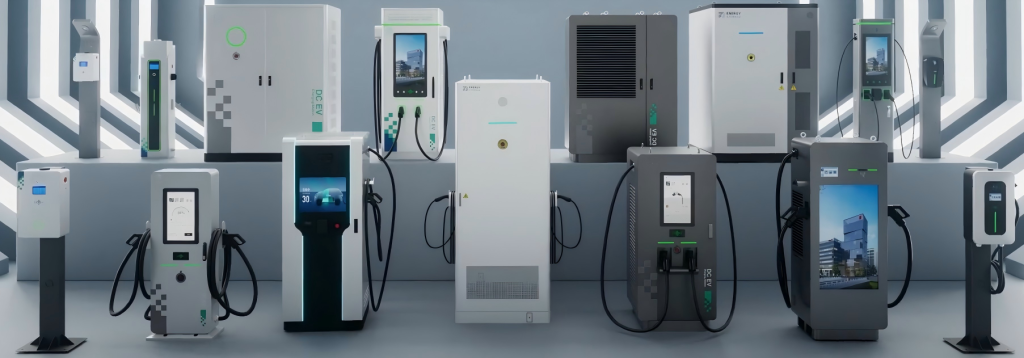
EV chargers fall into two main categories:
AC EV chargers
DC fast chargers
Each type serves different charging scenarios and user needs.
AC Chargers
AC chargers deliver alternating current to the electric vehicle. The vehicle’s onboard charger converts AC power into DC power for battery charging.
AC chargers are typically used for:
- home charging
- apartment charging
- workplace charging
- destination charging
Power levels typically range from 3.5 kW to 22 kW.
DC Fast Chargers
DC chargers convert AC electricity to DC power inside the charging station and deliver it directly to the EV battery.
This significantly reduces charging time.
DC chargers are commonly used in:
- public fast charging stations
- highway charging corridors
- fleet depots
- commercial charging hubs
Power levels range from 60 kW to more than 600 kW depending on the system design.
3. AC EV Chargers: Home and Workplace Charging
AC chargers remain the most widely installed EV charging equipment worldwide because they are easier to install and compatible with most residential electrical systems.
There are three primary AC charger types.
Portable EV Chargers
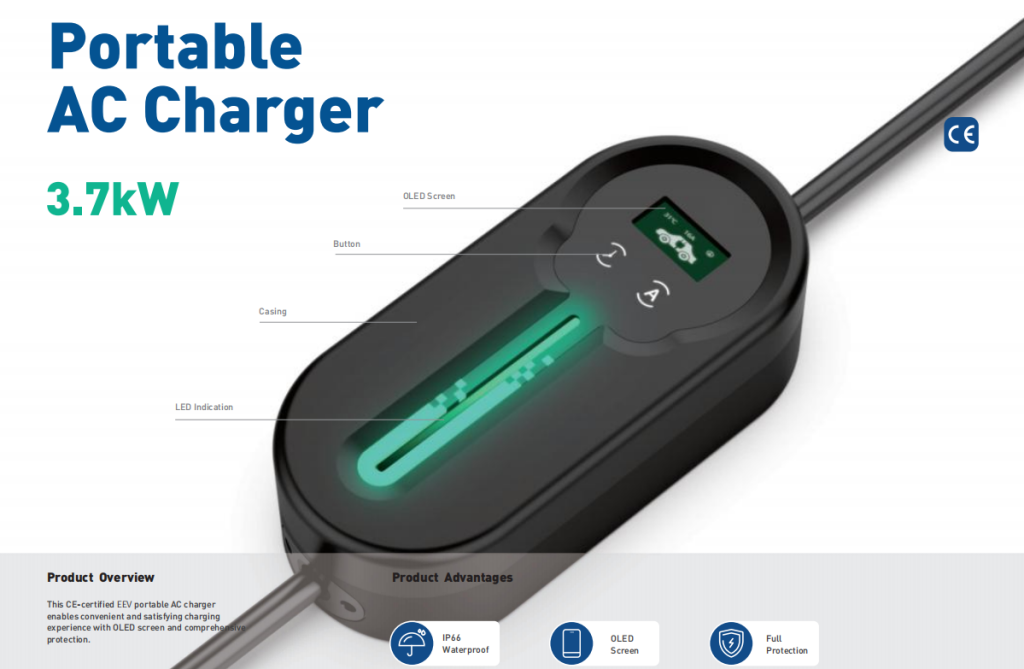
Portable chargers provide flexible charging solutions and are typically used for travel or temporary charging situations.
Typical Technical Parameters
| Specification | Value |
|---|---|
| Power Output | 3.5 kW – 7 kW |
| Voltage | 220–240 VAC |
| Output Current | up to 32A |
| Connector | Type 2 |
| Protection | IP65 |
| Cable Length | 5–7 m |
Portable chargers are often used as backup charging devices.
Wall-Mounted AC Chargers
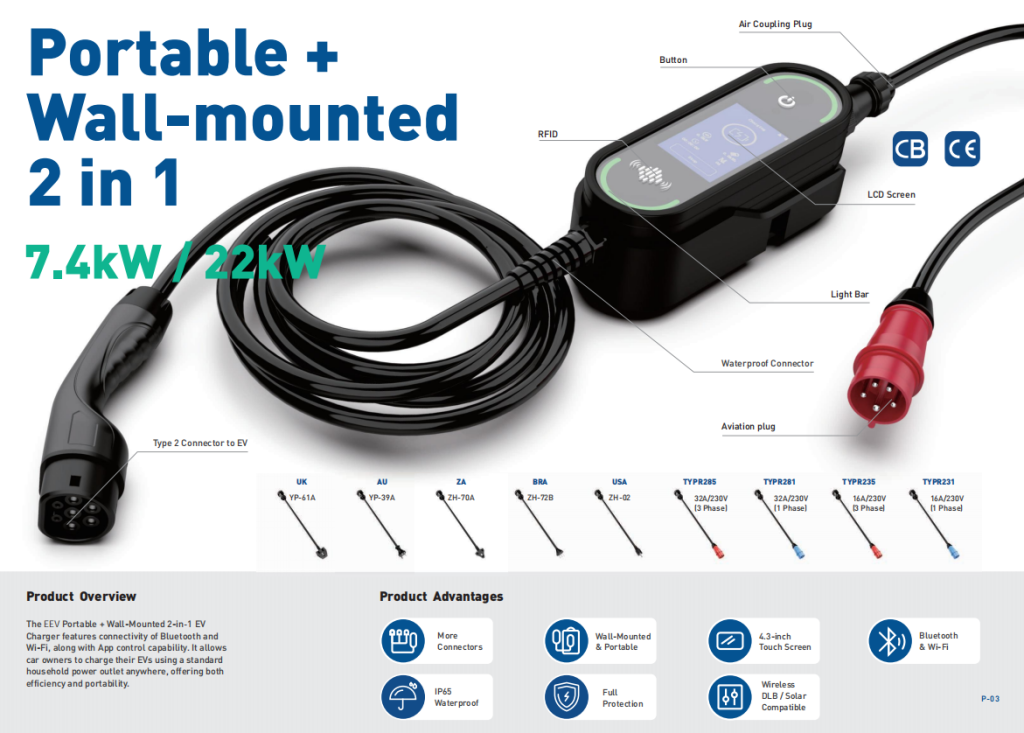
Wall-mounted chargers are the most common residential EV charging solution.
Typical Technical Parameters
| Specification | Value |
|---|---|
| Power | 7 kW / 11 kW / 22 kW |
| Voltage | 230 VAC / 400 VAC |
| Current | 16–32A |
| Connector | Type 2 |
| Installation | Wall mount |
| Protection | IP65 |
These chargers provide a good balance between charging speed and installation cost.
Smart OCPP AC Chargers
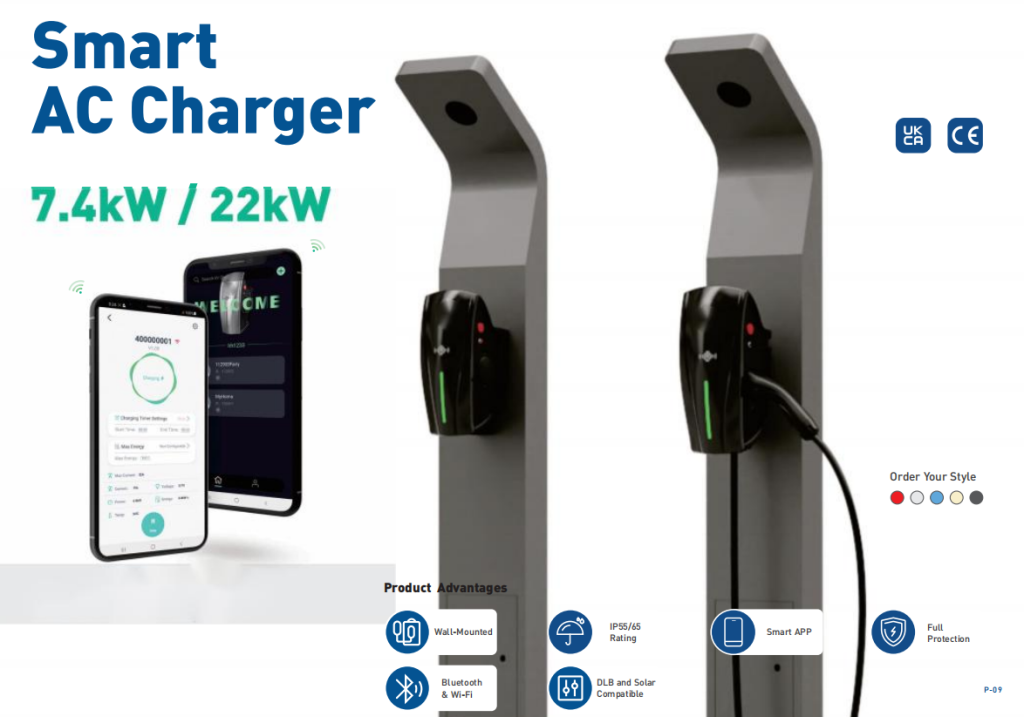
Commercial charging networks increasingly rely on smart chargers that support OCPP (Open Charge Point Protocol).
Smart chargers allow remote monitoring and control through charging management platforms.
Typical Features
- RFID authentication
- Mobile app access
- Charging data monitoring
- Remote diagnostics
- Load balancing
4. DC Fast Chargers: Public and Commercial Charging
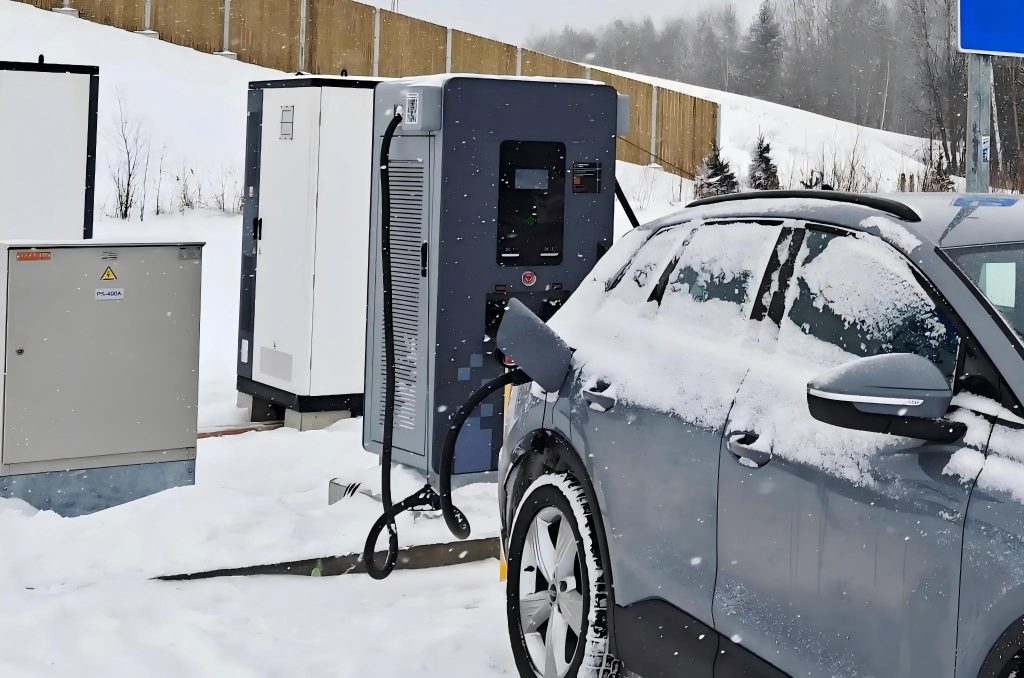
DC fast chargers provide significantly faster charging speeds than AC chargers.
They are typically installed in public charging stations or commercial charging hubs.
Typical Technical Specifications
| Specification | Value |
|---|---|
| Power Output | 60–240 kW |
| Input Voltage | 380–480 VAC |
| Output Voltage | 200–1000 VDC |
| Efficiency | ≥95% |
| Connector | CCS1 / CCS2 |
| Cooling | Air cooled |
These chargers can typically recharge an EV battery from 20% to 80% within 30–40 minutes depending on vehicle compatibility.
5. Ultra-Fast Charging for Electric Trucks and Fleets
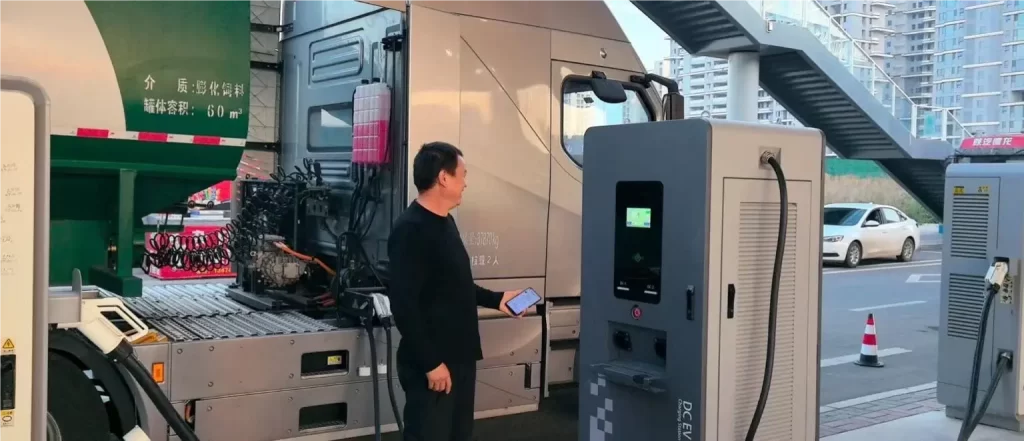
Heavy-duty electric vehicles require significantly more charging power than passenger cars.
Ultra-fast charging stations are designed for:
- electric truck fleets
- electric bus depots
- logistics hubs
- highway charging corridors
Typical Technical Specifications
| Specification | Value |
|---|---|
| Maximum Power | 360–600 kW |
| Voltage Range | 200–1000 VDC |
| Maximum Current | up to 600A |
| Cooling Method | Liquid cooled |
| Efficiency | ≥96% |
| Connector | CCS |
Liquid-cooled charging cables enable extremely high current while maintaining safe cable temperatures.
6. Key Factors When Choosing an EV Charger
Selecting the right EV charger requires considering several technical and operational factors.
Charging Speed
Charging speed is determined by charger power and vehicle compatibility.
Typical power levels:
| Charger Type | Power Range |
|---|---|
| Portable AC | 3–7 kW |
| Residential AC | 7–22 kW |
| Commercial AC | 11–22 kW |
| DC Fast Charger | 60–240 kW |
| Ultra Fast Charger | 360 kW+ |
Vehicle Compatibility
EV chargers must support regional connector standards.
Common connectors include:


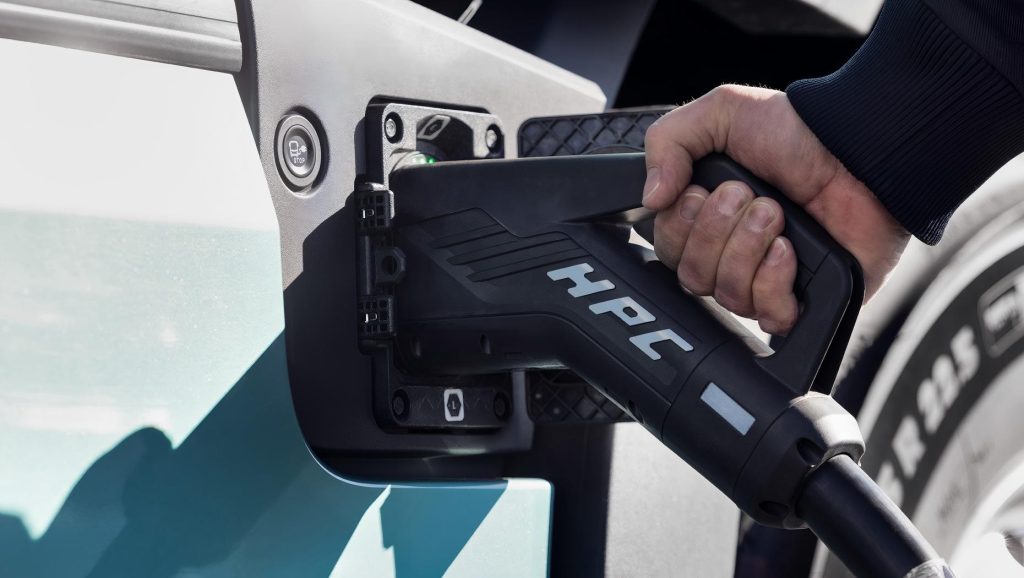
- Type 2
- CCS1
- CCS2
Installation Environment
Environmental factors affect charger selection.
Important considerations include:
- indoor vs outdoor installation
- temperature range
- humidity
- dust protection
Smart Charging Capability
Smart charging systems allow operators to optimize electricity usage and reduce peak demand.
Features include:
- dynamic load balancing
- remote monitoring
- smart scheduling
- network management
7. EV Charger Technical Specifications
Understanding charger technical specifications is essential for selecting the appropriate charging solution.
Important parameters include:
- output power
- voltage range
- charging current
- efficiency
- protection rating
- communication protocol
Higher power chargers require stronger electrical infrastructure.
8. Installation Requirements and Infrastructure Planning
EV charging stations require proper electrical planning and installation.
Electrical Capacity
High-power chargers may require transformer upgrades or dedicated electrical infrastructure.
Safety Protection
Modern chargers include multiple safety protections including:
- ground fault protection
- overcurrent protection
- surge protection
- temperature monitoring
Site Layout
Charging stations should be designed to allow easy vehicle access and efficient traffic flow.
9. Smart Charging and Energy Management
Smart charging technology plays a critical role in modern EV infrastructure.
Charging stations can integrate with energy systems to enable:
- renewable energy integration
- energy storage systems
- demand response programs
- smart grid operation
These capabilities help reduce energy costs and improve grid stability.
10. Future Trends in EV Charging Technology
Several major trends are shaping the future of EV charging.
Ultra-Fast Charging Networks
Charging stations above 350 kW are becoming increasingly common along major highways.
Fleet Electrification
Logistics companies are electrifying delivery fleets, increasing demand for high-power charging hubs.
Smart Grid Integration
Charging systems will increasingly communicate with utility grids to balance electricity demand.
Vehicle-to-Grid Technology
V2G technology may allow EV batteries to supply electricity back to the grid during peak demand.
11. Frequently Asked Questions About EV Chargers
What type of EV charger is best for home use?
Most homeowners install AC wall-mounted chargers between 7 kW and 11 kW, which provide reliable overnight charging.
How fast can a DC fast charger charge an EV?
A 150 kW DC fast charger can typically charge an EV battery from 20% to 80% in about 30 minutes depending on vehicle capability.
What is the difference between AC and DC EV chargers?
AC chargers rely on the vehicle’s onboard charger to convert AC power to DC, while DC chargers convert power inside the charging station and deliver DC electricity directly to the battery.
What does OCPP mean in EV charging?
OCPP stands for Open Charge Point Protocol, a communication standard that allows charging stations to connect with charging network management systems.
What charging power is needed for electric trucks?
Electric trucks often require 350 kW to 600 kW ultra-fast charging systems to minimize charging downtime.
Choosing the right EV charger in 2026 requires evaluating multiple factors including charging speed, infrastructure capacity, installation environment, and network connectivity.
AC chargers remain suitable for residential and workplace charging, while DC fast chargers provide rapid charging for public networks and commercial fleets. Ultra-fast liquid-cooled chargers are emerging as critical infrastructure for heavy-duty electric transportation.
Understanding charger types and technical parameters helps homeowners, businesses, and fleet operators deploy charging infrastructure that meets current needs while supporting future EV developments.
