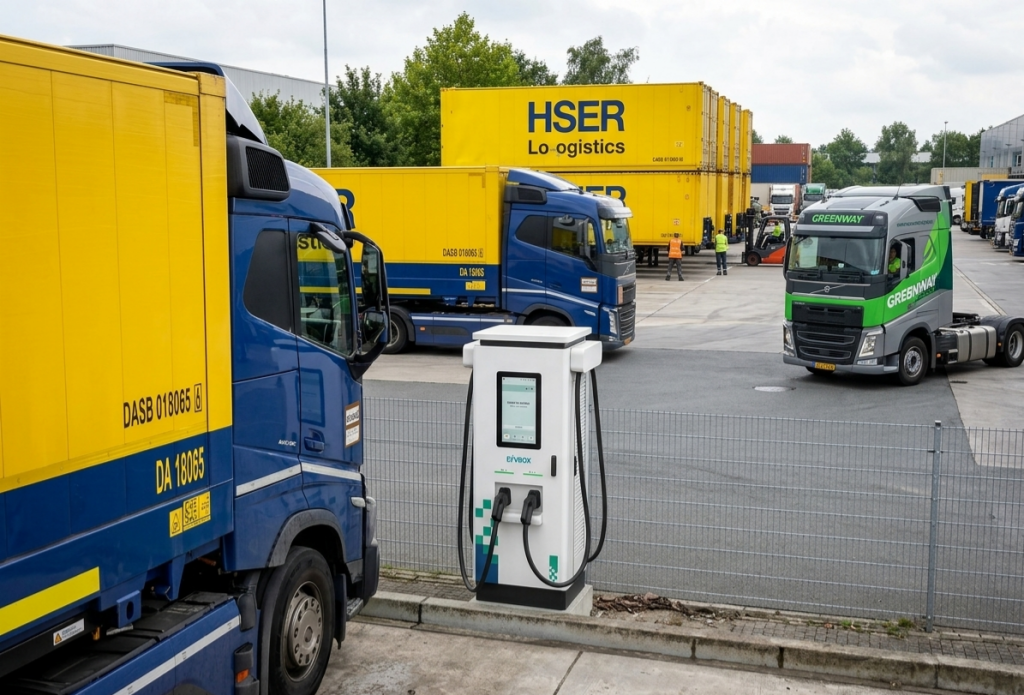
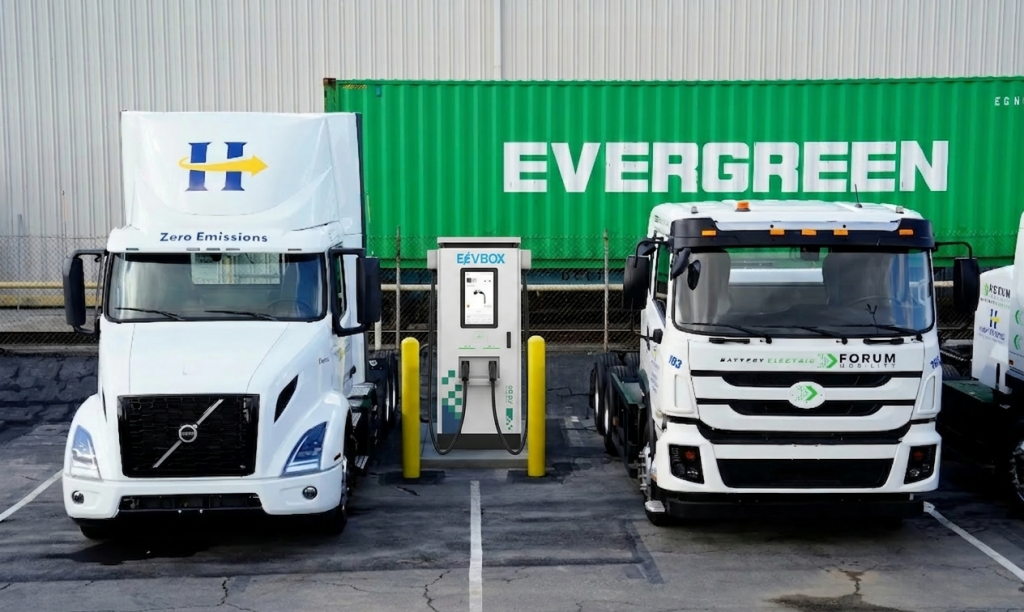
The electric vehicle (EV) revolution is no longer a “coming attraction”—it is the main event. However, as battery capacities grow and heavy-duty transport shifts to electric, the bottleneck remains the charging infrastructure. To meet this demand, a new breed of hardware has emerged: the Battery-Integrated, Liquid-Cooled MCS (Megawatt Charging System) DC Charger.
This article explores the hardware advantages, safety innovations, and smart connectivity features that define the next generation of EV charging.
1. The Power of MCS and High-Speed Protocols
At the heart of any future-proof charging station is its ability to talk to the vehicle and the grid.
Megawatt Charging System (MCS) Readiness
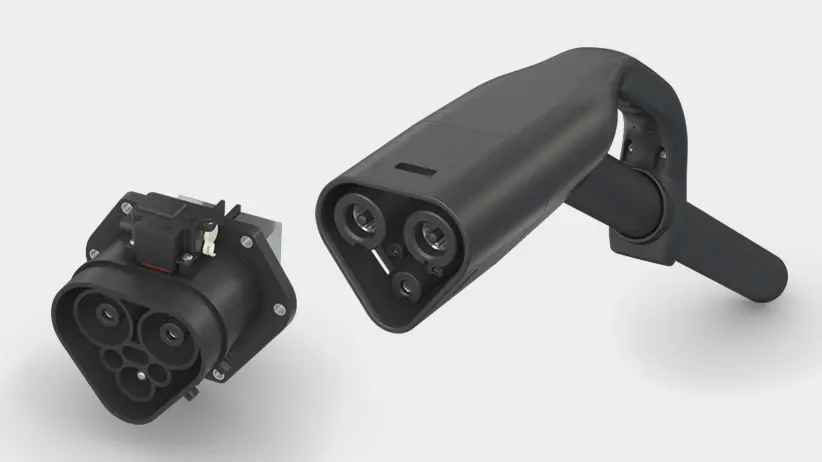
While CCS (Combined Charging System) has been the standard for passenger cars, the MCS (Megawatt Charging System) is the new frontier for heavy-duty trucks, buses, and even electric aircraft. Supporting MCS means this hardware is capable of delivering massive power loads, significantly reducing downtime for commercial fleets.
OCPP 1.6J and 2.0 Compatibility
Software is the soul of the hardware. By supporting OCPP 1.6J and 2.0, this charger ensures:
- Interoperability: Works with any management back-end.
- Advanced Diagnostics: Real-time health monitoring of the station.
- Smart Charging: Sophisticated load management to prevent grid overloads.
2. Hardware Superiority: The “Industrial Strength” Build
A charging pile is only as reliable as its internal components. This system utilizes a four-stage machine structure for maximum stability and modularity.
The BYD DC Relay & In-House SECC
- BYD DC Relay: Utilizing industry-leading relays ensures high-voltage switching is handled with precision and longevity.
- In-house developed SECC: The Smart Ethernet Control Center (SECC) is the “brain” of the charging process, optimized in-house for seamless communication between the vehicle’s BMS and the charger.
Premium Materials: 430 Stainless Steel & Colorful Marble
Durability meets aesthetics. The 430 stainless steel shell provides superior corrosion resistance, while the colorful marble gun holder adds a touch of premium design to high-end commercial installations.
3. Revolutionary Thermal Management
Heat is the enemy of efficiency. When pushing high current, internal components and cables can overheat, leading to power throttling.
Liquid Cooling System
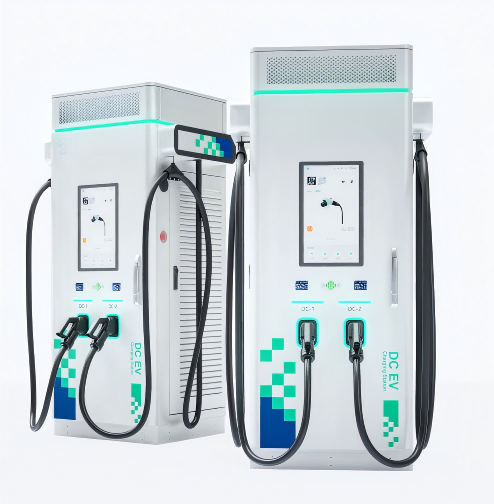
Unlike traditional air-cooled units that rely on loud fans, the liquid cooling system circulates coolant through the charging cables and power modules. This allows for:
- Higher Current Density: Thinner, lighter cables that can carry more power.
- Noise Reduction: Significantly quieter operation, ideal for urban environments.
Advanced Heat Dissipation
The unit features a dedicated heat dissipation motherboard and a heat dissipation nozzle, ensuring that even under maximum load, the internal electronics stay within optimal temperature ranges.
4. Battery Integration: Charging Without the Grid
One of the most significant features of this unit is its Battery-Integrated DC EV Charging capability.
Off-Grid Independent Operation
Most DC fast chargers are at the mercy of the local power grid. If the grid goes down, charging stops. This system changes the game:
- Energy Buffer: The integrated battery stores energy during low-demand periods.
- Continuous Charging: During power outages, the station continues to provide energy to vehicles.
- Peak Shaving: It reduces the strain on the grid, lowering operational costs for the owner.
5. Safety Without Compromise: The Triple-Sensor Shield
Safety in high-voltage environments is non-negotiable. This station is equipped with an array of sensors and active suppression systems
| Sensor Type | Function | Benefit |
| Water Immersion | Detects internal leakage or flood water. | Prevents short circuits in extreme weather. |
| Smoke Sensor | Real-time monitoring of particulates. | Early warning for potential electrical fires. |
| Temperature | Monitors internal product heat. | Triggers automatic power reduction if limits are exceeded. |
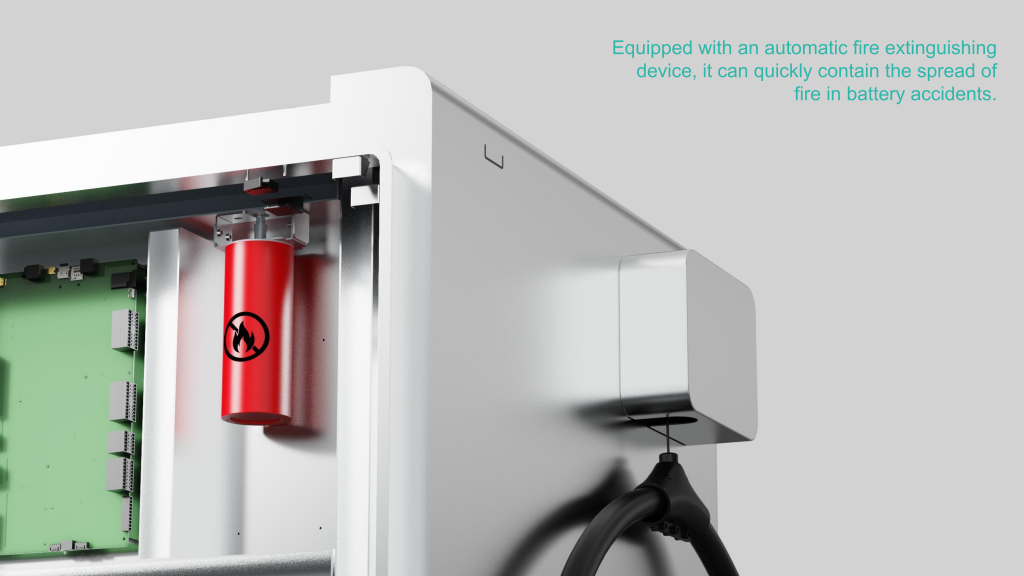
Automatic Fire Extinguishing Device
In the rare event of a battery thermal runaway—either within the charger’s integrated storage or the vehicle—the automatic fire extinguishing device activates instantly. This localized suppression can contain a fire before it spreads to surrounding infrastructure.
6. The User Experience (UX) and Interface
A charging station is a point-of-sale and a service hub. The interface must be intuitive and accessible.
- 21.5-inch LCD Screen: A massive, high-definition display provides clear instructions, charging progress, and a platform for digital out-of-home (DOOH) advertising.
- Multi-Mode Payment: Equipped with POS machines, allowing users to pay via credit card, mobile wallet, or RFID, removing the “app-only” barrier to charging.
- Cable Management System: An Electric Cable Manager ensures the 5m tethered cable never touches the ground, preventing trip hazards and reducing wear and tear on the connectors.
7. Precision and Compliance
For commercial operators, accuracy in billing is a legal requirement.
- Built-in MID Meter: The Measuring Instruments Directive (MID) certification ensures that the energy billed is exactly the energy delivered.
- PTB Certified: Meets the stringent German standards for transparency and security in electricity metering.
- Protection Ratings: With IP55 (dust and water resistance) and IK10 (high-impact resistance), the unit is built to withstand vandalism and harsh outdoor climates.
8. Smart Energy Management: DBL and Solar Load Balancing
As we move toward a greener grid, the ability to harmonize with renewable energy is vital.
Dynamic Load Balancing (DBL)
The Solar Load Balancing (DBL) feature allows the charger to prioritize energy coming from on-site solar panels. By balancing the load between the grid, the integrated battery, and solar arrays, operators can achieve near-zero-cost charging during peak daylight hours.
Summary of Technical Specifications
- Connectivity: Wifi, Bluetooth, Ethernet, 4G.
- Protection: Built-in 4P 30mA 25A Type A/B RCCB/RCBO for ground fault protection.
- Standard Equipment: 2 RFID cards, T2S Socket (1/2 Socket options), 5m Tethered Cable.
- Environmentals: Integrated heater for cold climates and sound insulation covers for quiet operation.
Conclusion: A Tier-1 Charging Solution
The combination of liquid cooling, MCS readiness, and battery integration puts this charging station in a league of its own. It isn’t just a “plug in the wall”—it is a sophisticated energy management hub designed to be safe, durable, and incredibly fast.
For businesses looking to future-proof their infrastructure, investing in hardware that includes smoke sensors, automatic fire suppression, and off-grid capabilities is no longer optional—it is the gold standard.